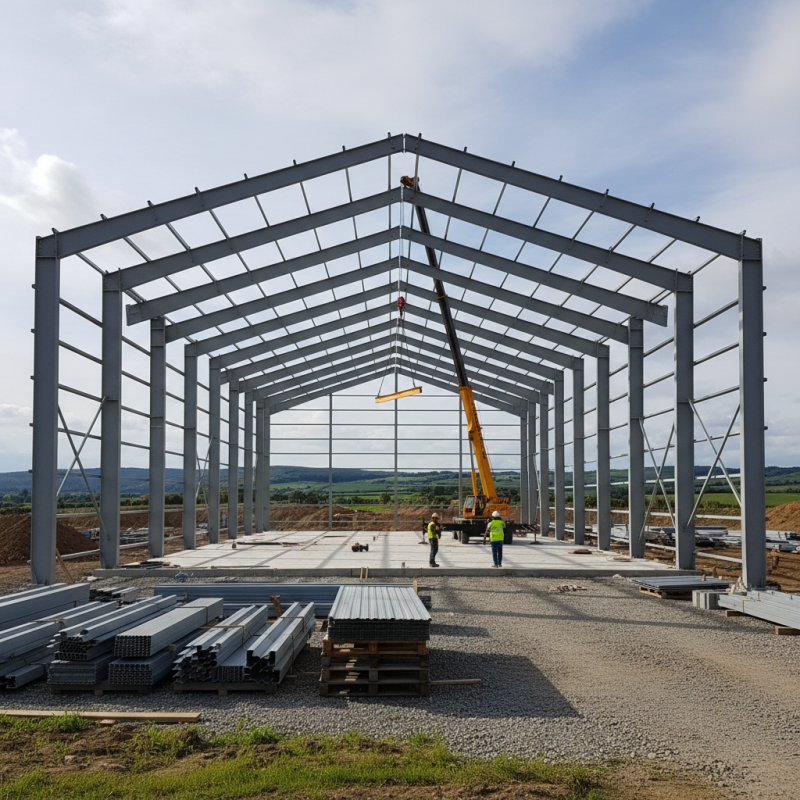
In the construction industry, the choice of structural systems significantly impacts costs. The Portal Frame Structure has gained popularity for its economic advantages. This choice is driven by its efficient use of materials and ease of assembly. Builders appreciate how portal frames support large spans.
This system allows for open interiors, minimizing wasted space. However, not all portal frame designs are equal. There can be hidden costs tied to maintenance and design flaws. Evaluating local materials is crucial; they can affect the overall budget.
Professionals must weigh initial costs against long-term durability. A solid understanding of engineering principles is essential. Effective planning can lead to significant savings in labor and resources. This makes portal frames a compelling option for cost-effective construction. Exploring all these factors creates a reliable foundation for your project.
Cost Considerations in Selecting Portal Frame Structures
When selecting portal frame structures, cost considerations take center stage. The initial investment greatly influences overall project expenses. Material choices, such as steel versus timber, impact budget. Steel frames are often more durable and require less maintenance, but can lead to higher upfront costs.
Labor costs are another crucial factor. Skilled workers are necessary for precise assembly. In regions with labor shortages, these costs can escalate. Additionally, improper design can lead to higher expenses. A frame that is not appropriately sized may require reinforcement or adjustments, increasing overall spending.
Considering energy efficiency is essential as well. A well-insulated structure can lead to significant savings in heating and cooling. However, incorporating advanced insulation materials can raise initial costs. Evaluating long-term savings versus upfront expenses is vital. Balancing cost with quality ensures a sustainable, cost-effective project.
Types of Materials Used in Cost-Effective Portal Frame Construction
The choice of materials in portal frame construction significantly impacts both durability and cost efficiency. Steel remains a popular option due to its strength-to-weight ratio and longevity. According to the American Institute of Steel Construction, structures using steel frames can have savings of up to 30% in construction time compared to other materials. However, costs can fluctuate based on market demand and global supply chains.
Another material option is aluminum, known for its resistance to corrosion. Recent studies suggest that aluminum frames can reduce overall lifecycle costs by up to 10%. This can be particularly beneficial in environments with high humidity or corrosive elements. Yet, while lighter than steel, aluminum may require thicker sections to achieve the same structural integrity, which affects initial costs and fabrication.
In some cases, engineered wood products such as glulam (glued laminated timber) are emerging as eco-friendly alternatives. A report from the Forestry Research Institute noted that wood can sequester carbon during its lifecycle, potentially leading to cost savings in sustainability efforts. However, attention must be paid to potential moisture issues and building codes, which may restrict their use in certain regions.
Ultimately, selecting materials requires balancing costs, availability, and specific project needs. Each option comes with benefits and drawbacks that must be carefully considered. Stakeholders should conduct a thorough analysis before committing to a material choice.
Best Portal Frame Structure for Cost Effective Construction
Design Strategies to Minimize Costs in Portal Frame Buildings
Portal frame structures are popular for their efficiency in construction. To minimize costs, several design strategies can be employed. An effective approach involves using standardized components. This reduces manufacturing and procurement costs. Uniform sizes simplify planning and reduce waste significantly.
Another strategy involves optimizing the structural layout. Careful design can minimize material usage while maintaining safety and functionality. For instance, using fewer but stronger beams can lower expenses. It's essential to balance aesthetics and structural integrity without unnecessary complexity.
Incorporating energy-efficient designs is also crucial. Natural lighting and ventilation can reduce utility expenses over time. However, initial investment in energy-efficient features must be carefully considered. Sometimes, the upfront cost may not yield immediate savings. Reflecting on these choices can lead to better financial decisions in future projects.
Analyzing Structural Efficiency in Portal Frame Engineering
Portal frame structures are known for their efficiency in construction. They combine strength with material savings. This design enables quick assembly, reducing labor costs. The shape allows for large spans, making them ideal for warehouses and industrial buildings. Engineers focus on optimizing these frames to maximize their load-bearing capacity and minimize material use.
Structural efficiency plays a crucial role in portal frame engineering. Each component must be carefully analyzed. Factors like beam size, column placement, and joint connections affect performance. Small adjustments can lead to significant cost savings. Engineers often wrestle with finding the right balance. Oversized components might add unnecessary weight and cost. On the other hand, undersized ones can compromise safety.
The focus on structural efficiency also demands a detailed understanding of local conditions. Soil characteristics and climatic factors influence design choices. Engineers must consider these elements to achieve reliable results. This analysis is not perfect and often requires iterative testing. Real-world challenges can expose weaknesses in initial designs. Continuous adjustments and reflections are necessary to create the best portal frame structures.
Best Portal Frame Structure for Cost Effective Construction? - Analyzing Structural Efficiency in Portal Frame Engineering
| Dimension |
Standard Value |
Material Cost ($/m²) |
Load Capacity (kN) |
Design Efficiency (%) |
| Span (m) |
12 |
50 |
25 |
85 |
| Eave Height (m) |
5 |
55 |
20 |
90 |
| Bay Width (m) |
4 |
48 |
15 |
88 |
| Rafter Slope (°) |
15 |
52 |
30 |
80 |
| Purlin Spacing (m) |
2 |
50 |
22 |
87 |
Case Studies of Successful Cost-Effective Portal Frame Projects
Portal frame structures have gained popularity for their cost-effectiveness in construction. Various case studies illustrate how these designs minimize expenses while maximizing functionality.
For instance, one project involved a warehouse that utilized a portal frame to reduce material costs. The design allowed for larger open spaces without internal columns, making construction simpler and faster.
Another successful case studied a sports complex that adopted a modular portal frame. This approach enabled quick assembly and reduced labor costs. The structural integrity remained high, even in adverse weather conditions.
Despite initial challenges, such as aligning the frames accurately, the project was completed on time and within budget. This example emphasizes the importance of planning and skilled labor in achieving success.
Reflecting on these projects, it's clear that while portal frames offer benefits, challenges still exist. Some builders struggle with specific material choices that may affect durability. Key lessons include the need for thorough site analysis and stakeholder communication.
Embracing these learnings can lead to improved outcomes in future projects.
FAQS
: The initial investment significantly influences overall project expenses.
Steel frames are durable and low maintenance but usually have higher upfront costs than timber.
Skilled workers are necessary for precise assembly. Labor shortages can escalate these costs.
A poorly sized frame may need reinforcements or adjustments, leading to higher costs.
Well-insulated structures lead to savings but may require higher initial investments for materials.
Steel is favored for its strength, while aluminum offers corrosion resistance and potential lifecycle savings.
Using uniform sizes reduces manufacturing costs and simplifies planning, leading to less waste.
It minimizes material usage while ensuring safety and functionality, ultimately lowering expenses.
Incorporating natural lighting and ventilation reduces long-term costs, although initial investments must be evaluated.
While eco-friendly, moisture issues and building code restrictions may limit their use in some regions.
Conclusion
The article "Best Portal Frame Structure for Cost Effective Construction" explores various aspects crucial to selecting an economical portal frame structure. It begins by discussing cost considerations that are vital when opting for a portal frame, highlighting how material choices can significantly impact overall expenses. The types of materials used in cost-effective construction are analyzed, providing insights into their benefits and relative costs.
Furthermore, the article delves into design strategies aimed at minimizing costs, emphasizing the importance of structural efficiency in portal frame engineering. By presenting case studies of successful and cost-effective portal frame projects, the article illustrates practical applications and strategies that lead to effective budget management without compromising structural integrity. Overall, these insights provide a comprehensive guide for builders and architects seeking to implement cost-efficient portal frame structures in their projects.

 ZHONGHUI HOLDINGS