In the evolving world of logistics and supply chain management, the demand for efficient storage solutions is paramount. The rise of e-commerce has further amplified this need. Increasingly, businesses are looking toward Prefabricated Warehouse solutions. These structures offer speed and flexibility in construction. They serve various industries, providing tailored solutions to meet diverse needs.
Prefabricated Warehouses are designed for easy assembly and customization. Their modular nature allows for quick scaling, which is crucial for growing companies. However, not all Prefabricated Warehouses are created equal. Buyers must consider factors such as material quality, design efficiency, and overall cost. Effective research is essential, as misleading information can lead to unforeseen challenges.
Global buyers should evaluate suppliers carefully. Reputation and past projects can reveal a lot about a company’s reliability. Seeking expert opinions may help navigate options. Ultimately, the right choice can lead to significant operational advantages. Investing time in understanding Prefabricated Warehouse solutions will pay off in the long run.
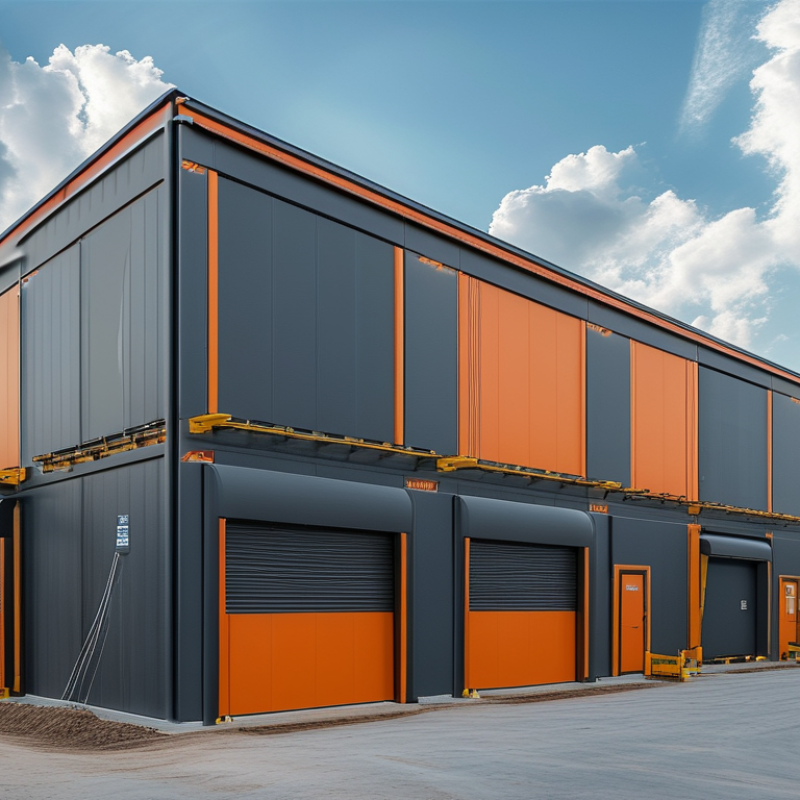
Overview of Prefabricated Warehouse Types and Their Advantages
Prefabricated warehouses have gained attention across various sectors. They come in different types such as modular, panelized, and portable designs. Each type offers unique benefits tailored to specific needs.
Modular warehouses are known for flexibility. They can be easily expanded or reconfigured. This adaptability helps companies respond to changing demands.
According to a report by the International Facility Management Association, prefabricated buildings can reduce construction time by up to 50%. This speed can significantly lower labor costs. Additionally, they often utilize eco-friendly materials, resulting in a 20% reduction in energy consumption compared to traditional structures. Despite these benefits, some buyers worry about long-term resilience and maintenance costs. Addressing these concerns is crucial for a sustainable solution.
Portable warehouses cater to companies needing temporary spaces, often in remote locations. Their easy setup is a plus, but they may lack stability compared to permanent structures. Evaluating specific needs is vital. Both temporary and modular options should prioritize durability. Experts note that buyers must consider local regulations and climatic conditions. These factors can heavily influence the effectiveness of warehouse solutions.
Market Trends in Prefabricated Warehousing Solutions for 2023
The prefabricated warehousing market is evolving rapidly in 2023. According to a recent market analysis, the global prefabricated warehouse market is expected to grow at a CAGR of 6.5% between 2023 and 2028. This growth is fueled by the increasing demand for efficient storage solutions and faster construction times. Key trends include the rise of sustainable materials and modular designs, which enhance flexibility and reduce waste.
Investors are increasingly focused on energy-efficient technologies. Reports indicate that warehouses incorporating solar panels see energy savings of up to 30%. This trend reflects a broader commitment to sustainability. However, some companies struggle to integrate these technologies due to upfront costs. Curious buyers might find themselves asking if the long-term savings justify the initial investment.
Tip: Assess your specific needs before making a decision. Not every solution suits every business. Modular options may work well for some, while traditional layouts might still be preferable for others. Flexibility is crucial, but knowing your operational requirements is just as important. Remember, investing in technology can be a double-edged sword; careful planning can lead to substantial returns or regrettable overspending.
Best Prefabricated Warehouse Solutions for Global Buyers - Market Trends in 2023
Cost Analysis of Prefabricated vs. Traditional Warehouses
The cost analysis between prefabricated and traditional warehouses reveals significant differences that can impact buyers worldwide. According to a report from the Modular Building Institute, prefabricated warehouses can reduce construction costs by up to 30%. This reduction is primarily due to lower labor costs and shorter construction timelines. Prefabricated solutions generally require less onsite assembly time, which can considerably reduce overall project expenses.
Additionally, operational costs often favor prefabricated buildings. The National Association of Home Builders reports that these structures have better thermal efficiency. With proper insulation, prefabricated warehouses can reduce heating and cooling expenses by 15% to 25%. Long-term savings on energy bills can offset higher initial investments. However, challenges do exist. Location-specific regulations can complicate installation for prefabricated structures. Structural integrity during transportation is another area requiring attention.
While prefabricated warehouses offer clear advantages, they also demand careful planning and consideration. The choice of materials and design can affect long-term performance. Buyers should assess their project needs thoroughly. They must also consider the balance between upfront costs and future savings. Each decision can influence both budget and functionality.
Key Players in the Global Prefabricated Warehouse Industry
The global prefabricated warehouse industry is evolving rapidly. Key players focus on innovative designs and efficient production methods. Many companies prioritize sustainability, reducing their carbon footprint while meeting increasing demand. They leverage advanced technologies like modular construction. This approach allows for faster assembly and reduced waste.
Experience and expertise in construction are crucial for success. Players in this market often employ skilled professionals to handle complex logistics. They aim for high-quality materials that withstand diverse weather conditions. Collaboration among engineers, architects, and manufacturers enhances the overall effectiveness of projects.
Despite these advancements, challenges persist. Some warehouses may lack flexibility for future needs. There are often discrepancies in delivery timelines. Moreover, not all prefabricated solutions meet local building regulations. Ongoing assessment and adaptation are necessary to address these issues effectively. Ultimately, the landscape is competitive, and constant innovation is vital for leaders in this field.
Innovative Technologies Enhancing Prefabricated Warehouse Construction
Prefabricated warehouses are transforming the logistics sector. Innovative technologies now play a key role in their construction. From 3D printing to modular design, these methods increase efficiency and reduce building time. These advancements enable quicker responses to market demands. However, the complexity of these technologies can lead to challenges in implementation.
Automation is also enhancing warehouse operations. Robots assist in inventory management, ensuring precision and speed. Smart sensors monitor the structural integrity of warehouses. These technologies can prevent costly mistakes. Yet, not all businesses can fully integrate these innovations. Affordability remains a concern for many.
Sustainable practices are gaining traction. Eco-friendly materials are being used in construction. This reduces the carbon footprint. Still, businesses must evaluate the long-term benefits versus initial costs. Better understanding these technologies requires continuous learning and adaptation. Embracing innovation is not without its hurdles. Each company must find its path forward.
Best Prefabricated Warehouse Solutions for Global Buyers
| Solution Type |
Key Features |
Construction Time (Weeks) |
Cost Efficiency (%) |
Sustainability Rating |
| Modular Warehouses |
Quick assembly, flexible design |
10 |
30 |
A |
| Steel Frame Structures |
Durable, high-load capacity |
12 |
25 |
B |
| Insulated Panels |
Energy-efficient, temperature control |
8 |
35 |
A+ |
| Container Warehouses |
Modular, cost-effective |
6 |
20 |
B+ |
| Hybrid Systems |
Combination of materials for best features |
14 |
15 |
A |
Conclusion
The article "Best Prefabricated Warehouse Solutions for Global Buyers" explores various aspects of prefabricated warehouses, highlighting their types and key advantages, such as reduced construction time and cost efficiency. In 2023, the market for prefabricated warehousing solutions is experiencing notable trends, including increasing demand for sustainable and customizable structures, which cater to the evolving needs of businesses worldwide.
Additionally, a cost analysis comparing prefabricated warehouses to traditional options demonstrates significant savings, further propelling their adoption. The piece also identifies key players in the global prefabricated warehouse industry and discusses innovative technologies that enhance their construction, setting the stage for an advanced and efficient warehousing future. Overall, prefabricated warehouses are positioned as a viable solution for global buyers seeking flexibility and value in their storage needs.

 ZHONGHUI HOLDINGS