Wholesale buyers choosing fast food containers in China face a practical question: which supplier can protect food, control costs, and deliver consistently? A low unit price matters, but so do leak resistance, stackability, heat performance, and reliable lead times. A container that fails during a busy lunch rush can cost more than its purchase price.
The scale of packaging waste makes material selection important, too. The OECD’s Global Plastics Outlook (2022) estimates that packaging generated 40% of global plastic waste in 2019. That figure covers packaging broadly, not fast food containers alone, but it highlights why buyers should examine material specifications and end-of-life claims carefully. UNEP’s Single-use Plastics: A Roadmap for Sustainability also identifies packaging as a major source of single-use plastic pollution. These reports offer context, not a substitute for supplier-level testing.
This guide compares container types, materials, customization options, and wholesale checks for buyers sourcing in China. Ask for samples. Test them with actual menu items, sauces, and delivery times. Review food-contact documentation, production capacity, minimum order quantities, and packaging dimensions before committing. Fast Food Containers House can be part of that supplier search, but the name alone is not evidence of quality. That distinction matters. Specifications can look polished on a product page, yet a lid may still loosen after repeated stacking. A little skepticism helps buyers find containers that work beyond the showroom.
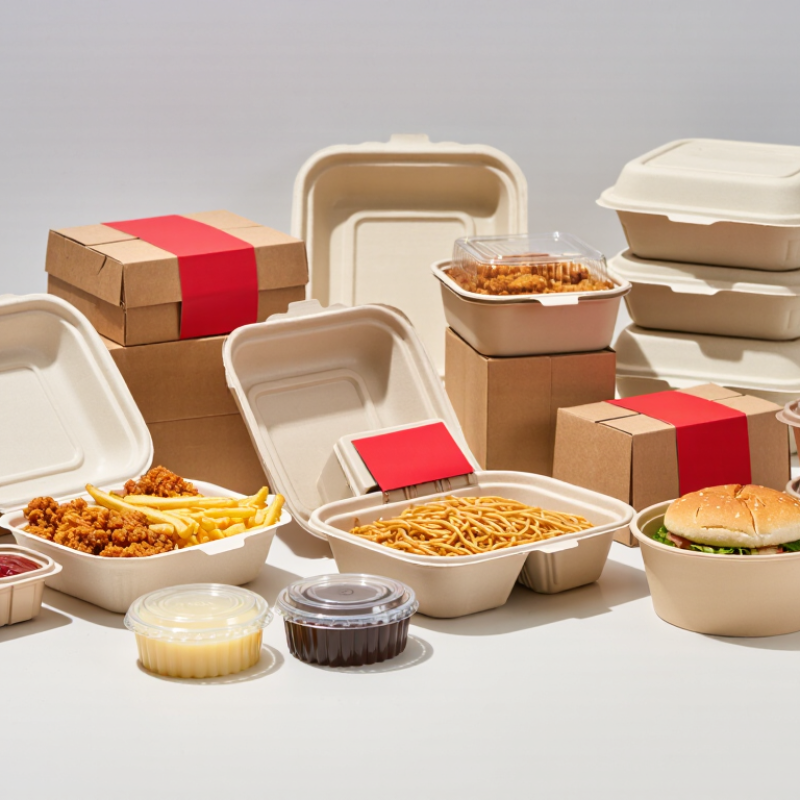
Fast food containers come in several practical formats. Hinged clamshells hold burgers, sandwiches, and combo meals securely. Paper bowls suit noodles, salads, and sides, while compartment trays keep sauces and fries apart. Cups and tubs are useful for soups, dips, and cold desserts. The right shape depends on the menu, portion size, and delivery time.
Material affects performance. Molded fiber can feel sturdy and helps absorb some surface moisture, but very wet foods may soften it. Paper containers often need a suitable lining for oily meals. Plastic options can resist leaks and show the food clearly, though trapped steam may make crispy items soggy. Small details matter. Look for secure closures, smooth edges, stackable shapes, and lids that fit without pressure. Vent holes can release steam, but too many may let food cool quickly.
For wholesale purchasing, compare container size, packing efficiency, and consistency between samples and bulk orders. Ask for food-contact documentation relevant to your intended market, and check storage conditions with the supplier. A neat-looking sample can still disappoint after a hot meal travels across town. Test the real meal. Fill containers with actual portions, close them, stack them, and inspect for leaks or crushing after a realistic delivery period. That extra check takes time, and it may reveal a trade-off you did not expect.
Chinese fast-food containers commonly use paperboard, molded fiber, bagasse, plastics such as PP and PET, and aluminum. Each material behaves differently with hot, oily, or moist foods. Paperboard is light and easy to print on, but its barrier coating matters. A greasy noodle dish may soften an uncoated box. Molded fiber and bagasse offer a firm, textured feel, though lids may fit less precisely across different production batches.
PP containers are often selected for warm meals, while PET is more commonly used for clear, cold-food packaging. These are broad patterns, not guarantees; the container’s grade and design affect performance. Aluminum handles heat well but is not suitable for every serving method. For wholesale orders, check wall thickness, lid closure, stack stability, and how containers perform after food has sat inside for several minutes. A neat sample can still disappoint in transit. It is easy to focus on unit price and overlook leakage or storage space.
Tips: Request samples made to the proposed specification. Test them with your actual menu, sauces, and delivery bags. Compare several batches when possible; small differences can matter.
Wholesale buyers should compare food containers against the meal, packing line, and delivery route—not price alone. A shallow tray may suit noodles with crisp toppings, while a deeper bowl can reduce spills in saucy dishes. Check the filled container, not just an empty sample. A lid that snaps shut on a clean bench may loosen when staff work quickly or hot food releases steam.
Ask suppliers for dimensions, usable capacity, material details, and temperature guidance in writing. Run a small trial with actual menu items: fill, close, stack, carry, and hold each sample for the usual service period. Look for warped rims, trapped condensation, oily spots, and lids that need two hands. Small flaws matter.
Compare case quantity, storage footprint, and how easily workers can separate nested pieces. A low unit price can lose its appeal if containers jam or add packing time. Food-contact suitability depends on material and intended use; check supplier documents instead of assuming every option tolerates heat or reheating. Paper comparisons look tidy. Real shifts are messier, and one test may not reveal seasonal changes in recipes or delivery conditions.
China’s fast-food container supply chain often begins with a buyer’s serving size, fill temperature, stacking method, and delivery route. Factories then match these needs to paperboard, molded fiber, or plastic, depending on the required performance and local rules. Buyers should request material specifications and test samples before approving a production run. A sample is only a starting point.
Production typically covers forming, printing, trimming, inspection, and packing. Ask for checks on dimensions, leakage, compression, odor, and print alignment. Keep approved samples and batch records for later comparison. Small differences matter. Yet inspection plans vary between suppliers, and a neat sample cannot guarantee every carton will match it. That deserves a careful conversation.
China’s State Post Bureau reported 174.5 billion express parcels in 2024, while the World Bank’s 2023 Logistics Performance Index scored China 3.7 out of 5. These figures show the scale of logistics activity, not a promise of any factory’s delivery speed. For wholesale orders, confirm carton counts, pallet details, production lead time, and shipping terms in writing. Ask for updates before goods leave the factory; a missed detail can delay receiving and create storage costs.
China Best Fast Food Containers for Wholesale Buyers?
Food Safety Standards, Customization, and Shipping Considerations
Wholesale buyers should match container materials to the food, temperature, and contact time. Request food-contact compliance documents and test results for the intended use. In the United States, relevant requirements include FDA food-contact substance regulations under 21 CFR. Do not assume a general “food-safe” claim covers hot, oily, or acidic meals. Small details matter. A lid that loosens during delivery can undo careful material selection.
Customization affects more than appearance. Ask for sample containers with the actual meal, sauce, and lid before approving a large run. Check stack height, leak resistance, label adhesion, and how cartons fit on a pallet. The U.S. EPA’s 2018 Advancing Sustainable Materials Management report estimated that packaging made up 82.2 million tons, or 28.1%, of municipal solid waste. That figure covers all packaging, not food containers alone, but it highlights why right-sizing and material choices deserve attention. Shipping samples first may feel slower; it can prevent costly mismatches.
Tips: Request carton dimensions, gross weight, and pallet loading plans. Confirm print proofs and food-contact documentation before production. Then test it. I would still recheck the first shipment—specifications can look perfect on paper and behave differently in transit.
Typical internal volume of common dry freight containers (approximate, in cubic metres)
A larger container can offer more cubic capacity, but the usable space depends on the container’s exact dimensions and how cartons are packed. When comparing wholesale packaging, also confirm food-contact suitability for the intended food and conditions, request customization samples, and check carton dimensions before booking freight.
Figures are typical approximate internal volumes; specifications vary by container.
Hinged clamshells hold burgers and sandwiches. Paper bowls suit noodles and salads. Compartment trays keep fries and sauces apart.
Molded fiber feels sturdy and absorbs some surface moisture, but very wet meals may soften it. Plastic can resist leaks, yet trapped steam may soften crispy food.
They can be, when the lining matches the food. An uncoated box may soften around greasy noodles.
Check the fit, secure closure, smooth edges, and stack stability. Vent holes release steam, but too many can cool food quickly. Small details matter.
Fill samples with real portions and sauces. Close and stack them, then check for leaks or crushing after a realistic delivery period. Test it first.
Request food-contact documents for the intended use. Confirm container size, carton dimensions, gross weight, pallet plans, and print proofs.
Yes. Test label adhesion, stack height, leak resistance, and carton fit. A neat sample can still disappoint after a hot meal travels across town.
Look beyond unit price. Packing efficiency, storage space, batch consistency, and damage risks matter too. I might still recheck the first shipment; paperwork cannot show every transit problem.
Choosing the right fast food containers means matching each format to its intended use, from sturdy boxes for hot meals to leak-resistant bowls for soups and sauces. Chinese food packaging commonly uses paper, molded fiber, plastic, and aluminum, with each material offering different benefits in strength, heat tolerance, weight, and recyclability. Wholesale buyers can compare options by checking capacity, closure quality, durability, unit price, and suitability for their menu and service style. Fast Food Containers House can help frame this selection process around practical needs rather than appearance alone.
China’s manufacturing and wholesale supply process may involve reviewing samples, confirming specifications, discussing order quantities, and coordinating production timelines. Buyers should also ask for relevant food-contact safety documentation and clarify customization choices such as dimensions, colors, and printed designs. Before placing an order, consider packaging for transit, shipping costs, delivery schedules, and how products will be stored on arrival. Clear communication with suppliers helps reduce misunderstandings and supports a more reliable purchasing decision.

ZHONGHUI HOLDINGS