The global market for Container Folding House solutions is expanding beyond temporary shelters. Manufacturers now serve construction camps, emergency housing, remote offices, classrooms, and compact residential projects. Their products may look similar in photographs, yet performance can differ sharply after transport, unfolding, and installation.
This guide examines ten leading Container Folding House manufacturers worldwide through practical and verifiable criteria. These include structural design, folding mechanisms, material quality, insulation, waterproofing, fire resistance, factory controls, delivery experience, customization, and after-sales support. We also consider documented projects, production capacity, certifications, warranty terms, and regional compliance requirements. A polished brochure is not proof of quality. Factory visits, independent inspections, and real project references matter more.
Architect and sustainability authority Carl Elefante offered a useful principle: “The greenest building is the one that is already built.” That idea applies here, but only partly. A foldable unit can reduce transport volume and construction waste. Poor insulation or short service life can erase those gains. The ranking therefore avoids treating low prices as automatic advantages. Some manufacturers provide stronger engineering evidence, while others offer better customization or faster deployment. No list is perfect. Local climate, foundation conditions, labor skills, and shipping routes can change the best choice. Readers should verify technical documents before purchasing, especially for high-wind, cold, hot, or humid environments. Small details matter. A damaged hinge can delay an entire site. This comparison aims to make those differences visible, practical, and easier to evaluate.
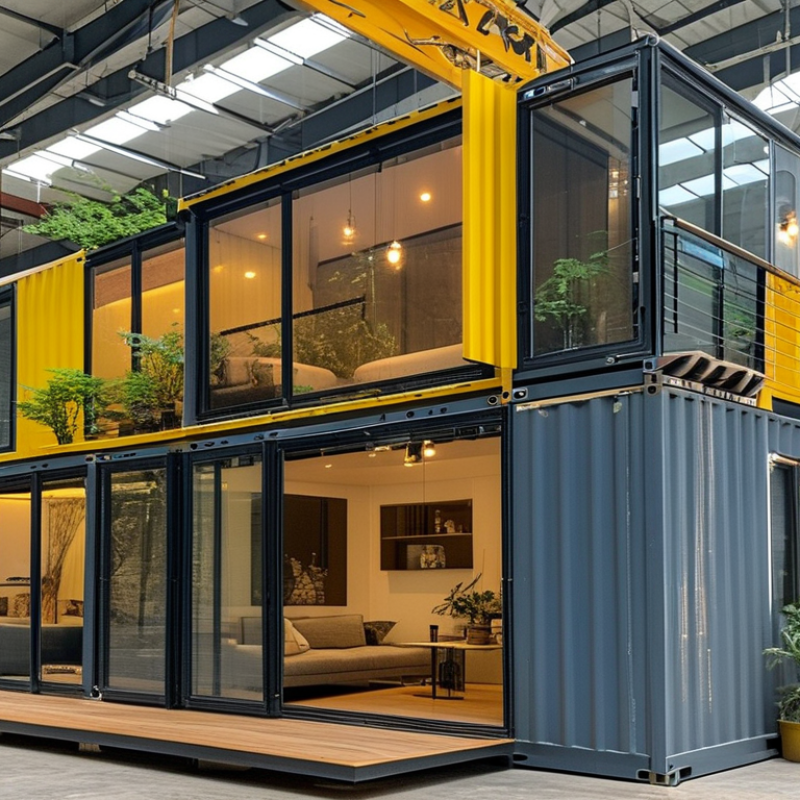
A container folding house is a factory-built modular structure designed for compact transport and rapid installation. Its steel frame, insulated panels, walls, or floors fold inward before delivery. At the site, trained workers unfold the sections, connect services, and secure the unit to a prepared foundation. It resembles a container during transport, but it is not always a converted shipping container.
The definition remains somewhat flexible. Some models serve as temporary offices, classrooms, emergency accommodation, or small homes. Others include kitchens, bathrooms, plumbing, wiring, and finished interior panels. The scope can cover one compact unit or several connected modules. However, a folding structure should not be judged by appearance alone. Engineers must review load paths, wind resistance, fire performance, insulation, drainage, and moisture control. Local building requirements still matter.
Practical inspection often reveals small weaknesses. Door seals may compress unevenly. Floor joints can collect water if the foundation is poorly leveled. Transport savings also depend on folded dimensions, crane access, and road limits. Documentation should identify materials, structural calculations, installation steps, maintenance needs, and warranty conditions. A low purchase price does not prove reliability. Nor does a fast installation guarantee long-term comfort. Buyers should compare verified test data with the intended climate, occupancy, and service life. The category is useful, but its boundaries need careful questioning.
A global ranking should measure evidence, not attractive renderings. Each manufacturer should disclose factory capacity, engineering credentials, and completed project records. The review should verify load calculations, folding-cycle tests, fire performance, insulation values, and weather resistance. Evidence matters.
Compliance is another decisive filter. Products should align with applicable building codes, electrical rules, transport standards, and local permitting requirements. ISO 668 provides widely used container dimensions, but dimensions alone do not prove housing quality. The International Energy Agency reports that buildings and construction remain responsible for about 30% of global energy demand. Therefore, energy performance deserves serious ranking weight.
Delivery reliability needs measurable proof. Assess production lead times, packaging damage rates, installation hours, spare-part access, and after-sales response. McKinsey research on modular construction indicates potential schedule reductions of 20% to 50%, although results vary by project and region. That caveat matters. A fast factory cannot solve poor foundations or delayed permits.
Material transparency should include steel grade, coatings, insulation density, window specifications, and expected service life. Life-cycle assessments are useful, yet many suppliers publish incomplete data. I would score verified environmental declarations higher than broad sustainability claims. Site reality differs. A perfect ranking is impossible because climate, labor costs, and code requirements change worldwide. Still, transparent testing, independent inspections, and repeatable delivery records create the most reliable comparison.
The leading container folding house manufacturers serve more than one domestic market. Their distribution networks often connect factories, regional warehouses, freight forwarders, and local installers. This structure reduces delivery delays when projects require several units. Buyers should examine port access, inland transport, and replacement-part availability before signing a purchase agreement. A low factory price can become expensive after long-distance handling.
Market coverage also depends on product adaptation. Manufacturers supplying Africa, Southeast Asia, Europe, and North America may adjust insulation, electrical systems, drainage, and roof design. Local climate matters. A humid coastal site needs corrosion protection, while a cold inland location requires stronger thermal insulation. Experienced suppliers provide technical drawings, packing lists, installation guidance, and documented quality checks. These details show practical knowledge, not just marketing reach.
A supplier may list many countries but rely on one external agent. That can weaken after-sales support. Ask for recent project references, delivery records, warranty terms, and clear responsibilities between factory and distributor. Certifications should match the destination’s building and safety requirements. Independent inspections can reveal welding gaps, damaged panels, or incomplete fittings before shipment. No map is perfect. Market coverage can change quickly, and some manufacturers underestimate local installation skills. That assumption can fail. Reliable cooperation requires transparent communication, realistic lead times, and trained regional partners.
The top ten container folding house manufacturers stand out through different strengths, not identical products. One specializes in compact units for remote worksites. Another builds larger models with reinforced frames and insulated wall panels. A third focuses on rapid deployment, using prewired electrical systems and factory-fitted plumbing. These details reduce installation time, although site preparation still matters. Poor foundations can create expensive problems.
Several manufacturers emphasize climate performance. One designs roofs for heavy rain and strong sunlight. Another offers improved thermal insulation for cold regions. A workshop serving coastal projects uses corrosion-resistant coatings and sealed joints. A fourth producer develops foldable classrooms and medical facilities with washable interiors. Their practical layouts show field experience. Yet, advertised performance should be checked against test documents.
The remaining profiles reflect customization and production discipline. One manufacturer provides modular offices with movable partitions. Another produces housing with accessible entrances and wider internal passages. A high-volume factory relies on automated welding, while a smaller specialist offers closer engineering support. One supplier is known for recyclable materials and reduced packaging. The final manufacturer combines transport planning with on-site assembly training. This can prevent avoidable errors. Reliable buyers should review structural calculations, fire safety records, material specifications, warranty terms, and previous project evidence. Factory visits help, but they are not perfect proof. Some impressive show units hide ordinary weaknesses. Independent inspection remains worthwhile before shipment.
Top 10 Container Folding House Manufacturers Worldwide
A credible top-10 comparison should examine more than factory photos and low prices. Key product features include galvanized steel frames, insulated sandwich panels, waterproof roof joints, fire-rated interiors, and rapid folding mechanisms. Some units arrive in under one hour. Others require cranes, electrical work, and local finishing.
Certification evidence separates serious suppliers from attractive listings. Check ISO 9001 for quality management, ISO 14001 for environmental control, and ISO 45001 for workplace safety. For container-based structures, CSC-related compliance may matter during transport. Local building approval remains essential. A certificate is not proof of good thermal sealing. Ask for test reports, structural calculations, wind-load ratings, and material traceability. UNEP’s 2023 Global Status Report states that buildings used about 34% of global energy and produced roughly 37% of energy-related emissions in 2022. Therefore, insulation and energy performance deserve equal attention.
Tips: Compare service after delivery. Review installation manuals, spare-part access, warranty length, remote support, and response times. Request a sample bill of materials. Also ask whether the quoted price includes foundations, plumbing, wiring, transport, and assembly. McKinsey reports that modular construction can reduce project schedules and costs, but results vary by location and design. That warning matters. The cheapest offer may become expensive after customs, site work, or redesign. The comparison is imperfect, because certification scope and building rules differ across countries.
: They should disclose factory capacity, engineering credentials, and completed project records. Evidence matters. Ask for load calculations, folding-cycle tests, fire performance, insulation values, and weather-resistance data.
It should follow applicable building codes, electrical rules, transport standards, and local permitting requirements. Dimensions alone are insufficient. A standard container size does not prove housing quality or approval.
Factory production may reduce construction time by 20% to 50%. Results vary. Poor foundations, delayed permits, and difficult sites can erase those gains.
Prewired electricity and factory-fitted plumbing can reduce on-site work. Clear instructions help. Assembly training may prevent wiring, sealing, and alignment mistakes.
Review steel grade, protective coatings, insulation density, window specifications, and expected service life. Look closely. Coastal projects may need corrosion-resistant coatings and sealed joints.
Roofs for heavy rain and sunlight help in demanding climates. Cold regions need stronger thermal insulation. No single design performs equally well everywhere.
Compare production lead times, packaging damage rates, installation hours, spare-part access, and support response. Numbers reveal habits. Also review warranty terms and previous project evidence.
No. A factory visit can reveal equipment and workflow, but it is not complete proof. Show units may look impressive. Independent inspections should verify structure, fire safety, materials, and shipment condition.
Not always. Verified environmental declarations are stronger than broad claims about recyclable materials or reduced packaging. Life-cycle data may remain incomplete, so buyers should question missing evidence.
This article presents a practical overview of the global Container Folding House industry, beginning with its definition, structural characteristics, transport advantages, and typical applications. It explains how these units are designed for quick deployment, efficient storage, flexible expansion, and use in settings such as temporary accommodation, offices, classrooms, site facilities, and emergency support. The discussion also clarifies the scope of the market and the factors used to evaluate leading manufacturers, including product quality, engineering capability, production capacity, customization options, delivery efficiency, certifications, after-sales service, and international market coverage.
The ranking section introduces ten prominent manufacturers from different regions without focusing on brand promotion. Each profile compares manufacturing strengths, material selection, folding mechanisms, insulation performance, safety features, configuration flexibility, and service networks. The article concludes with a side-by-side review of product features, relevant certifications, warranty policies, installation assistance, and customer support, helping buyers understand how global suppliers differ and select a Container Folding House solution suited to their project requirements, budget, climate, and intended use.

ZHONGHUI HOLDINGS